
Global Financial Support
Understanding Inflation – Causes, Demand-Pull, Cost-Push, and Government Policy Impact
Inflation is one of the most important economic concepts that affects the daily lives of individuals, businesses, and governments. When inflation rises, the purchasing power of money decreases, meaning consumers need to spend more money to buy the same goods and services.
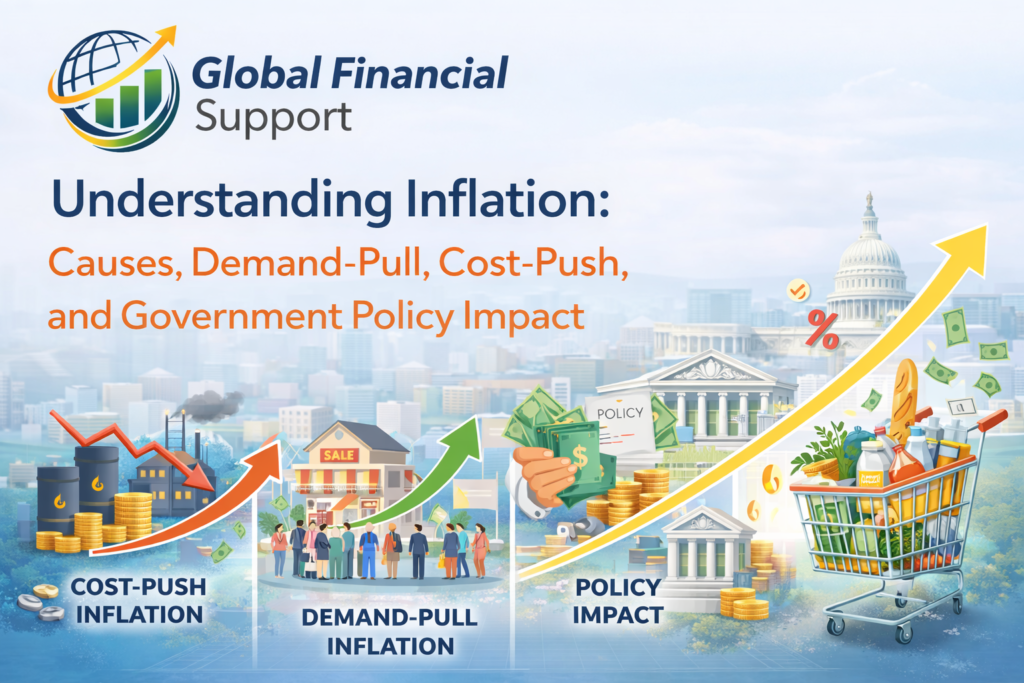
Understanding the main causes of inflation helps people make better financial decisions and allows policymakers to design strategies to control economic instability. The most common causes of inflation include demand-pull inflation, cost-push inflation, and policy-driven inflation.
What Is Inflation?
Inflation refers to the general increase in prices of goods and services over time. When inflation occurs, the value of money declines, and consumers experience higher costs for everyday necessities such as food, housing, transportation, and energy.
Moderate inflation is often considered normal in a growing economy, but excessive inflation can create financial pressure for households and businesses.
Demand-Pull Inflation
Demand-pull inflation occurs when consumer demand for goods and services exceeds the available supply in the market.
When people have more income, employment levels rise, and consumer confidence increases, demand for products also grows. If businesses cannot increase production quickly enough to meet this demand, prices start rising.
Common factors that create demand-pull inflation include:
- Strong economic growth
- Increased consumer spending
- Expansionary government policies
- Higher employment and wage growth
For example, if consumers suddenly start spending more on housing or vehicles, but supply remains limited, prices will increase due to higher demand.
Cost-Push Inflation
Cost-push inflation occurs when the cost of production increases, forcing businesses to raise prices in order to maintain profitability.
When companies face higher expenses for raw materials, energy, transportation, or wages, these costs are often passed on to consumers in the form of higher prices.
Major causes of cost-push inflation include:
- Rising fuel and energy prices
- Increased labor costs
- Supply chain disruptions
- Higher prices for raw materials
For instance, if oil prices increase significantly, transportation and manufacturing costs also rise, which eventually increases the prices of goods across the economy.
Policy-Driven Inflation
Government and central bank policies can also contribute to inflation. Certain economic policies designed to stimulate growth can sometimes increase inflationary pressure.
Examples include:
- Excessive money supply in the economy
- Expansionary fiscal policies
- Lower interest rates that encourage borrowing and spending
When central banks increase the money supply or keep interest rates low for extended periods, consumers and businesses may borrow more money and increase spending. While this can stimulate economic growth, it can also contribute to rising inflation if supply does not increase accordingly.
How Inflation Affects the Economy
Inflation influences many aspects of the economy, including consumer purchasing power, investment decisions, and business costs.
Key economic effects include:
- Reduced purchasing power for consumers
- Increased operational costs for businesses
- Changes in interest rates and borrowing costs
- Impact on savings and long-term investments
For households, inflation means that everyday expenses such as groceries, fuel, and rent become more expensive over time.
Managing Inflation
Governments and central banks use several tools to control inflation and maintain economic stability. These include:
- Adjusting interest rates
- Managing the money supply
- Implementing fiscal policies that regulate spending
Central banks often increase interest rates when inflation becomes too high, as higher borrowing costs can reduce spending and slow down price increases.
Conclusion
Inflation is a natural part of economic growth, but it must be carefully managed to avoid economic instability. The primary causes of inflation include demand-pull factors, rising production costs, and government or monetary policy decisions.
By understanding these causes, individuals and businesses can better prepare for economic changes and make informed financial decisions.