
Global Financial Support
Checking vs Savings Accounts: Key Differences and How to Choose the Right One
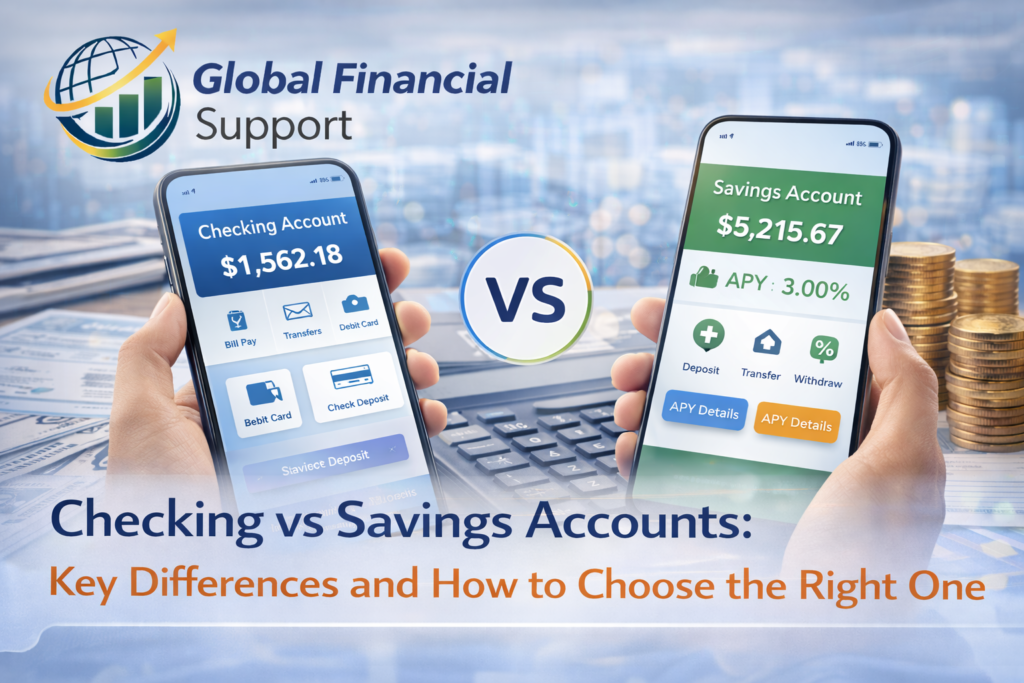
When managing personal finances, two of the most common types of bank accounts people use are checking accounts and savings accounts. Both accounts serve different purposes and understanding how they work can help you manage your money more effectively.
Whether you are opening your first bank account or looking to organize your finances better, knowing the difference between these two accounts can help you make smarter financial decisions.
What Is a Checking Account?
A checking account is designed for everyday financial transactions. It allows you to easily access your money for daily expenses such as paying bills, shopping, or withdrawing cash.
Checking accounts typically offer several convenient features, including:
- Debit card access for purchases
- Online and mobile banking
- Direct deposit for salary payments
- ATM withdrawals
- Bill payment services
Because checking accounts are meant for frequent use, they usually provide unlimited transactions or a high transaction limit.
However, most checking accounts offer little or no interest on the money stored in them.
What Is a Savings Account?
A savings account is intended to help you store money for future needs. These accounts are designed to encourage saving rather than frequent spending.
Savings accounts generally provide:
- Interest on deposited funds
- Secure storage for emergency savings
- Limited withdrawals each month
- Tools for automatic savings transfers
Because banks use these deposits for lending and investment purposes, they offer interest earnings to customers who keep money in savings accounts.
While interest rates vary between banks, savings accounts usually provide better returns than checking accounts.
Key Differences Between Checking and Savings Accounts
Here are some important differences between these two account types:
| Feature | Checking Account | Savings Account |
|---|---|---|
| Purpose | Daily transactions | Saving money |
| Interest | Usually very low or none | Earns interest |
| Transactions | Frequent withdrawals allowed | Limited withdrawals |
| Access | Debit cards, checks, payments | Mostly transfers or limited withdrawals |
Both accounts are often used together to maintain better financial balance.
When Should You Use a Checking Account?
Checking accounts are best used for everyday financial activities. This includes paying bills, making purchases, receiving salary deposits, and transferring money.
Since these accounts allow frequent access to funds, they provide flexibility for daily spending needs.
When Should You Use a Savings Account?
Savings accounts are ideal for setting aside money for future goals or emergencies. They are commonly used for:
- Emergency funds
- Travel savings
- Education expenses
- Long-term financial goals
Because the money earns interest, it can grow gradually over time.
Why Many People Use Both Accounts
Most financial experts recommend using both checking and savings accounts together.
A common strategy is to deposit your income into a checking account for daily spending while transferring a portion of that money into a savings account regularly. This helps maintain financial discipline while ensuring easy access to funds when needed.
Conclusion
Understanding the difference between checking and savings accounts can help you manage your finances more effectively. Checking accounts provide convenience for daily transactions, while savings accounts help you build financial security by earning interest on your money.
By using both accounts strategically, you can balance spending and saving while working toward your long-term financial goals.