
Global Financial Support
How Tax Cuts and Government Spending Stimulate Economic Growth
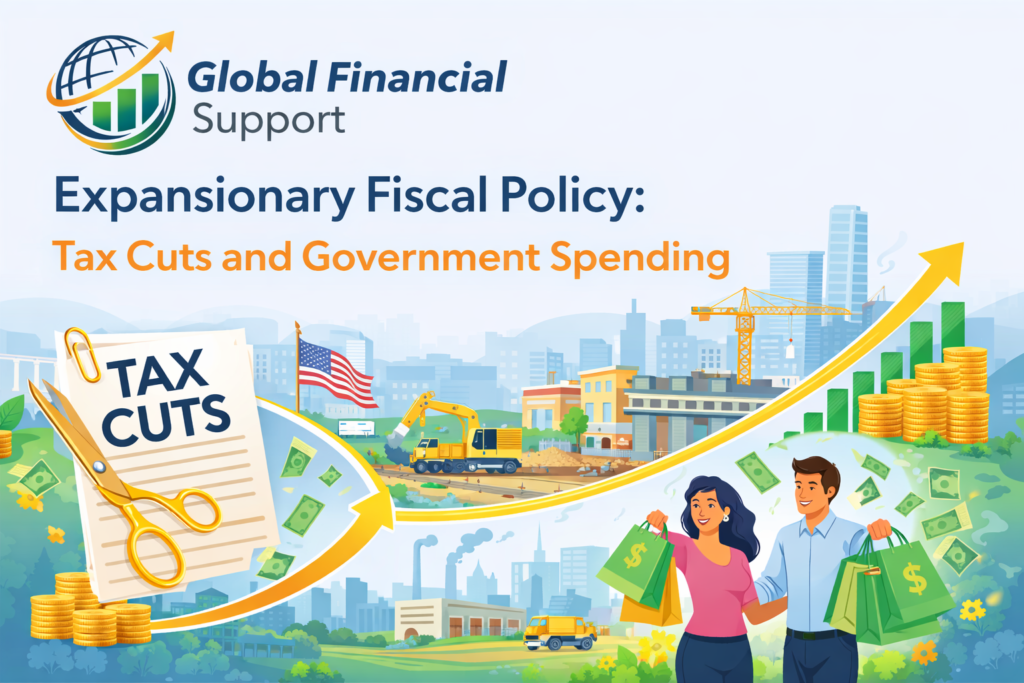
Economic growth does not always move in a straight line. During periods of recession, unemployment, or slow economic activity, governments often use expansionary fiscal policy to stimulate growth and revive economic confidence. This policy mainly works through two tools: tax cuts and increased government spending.
Understanding how expansionary fiscal policy works can help individuals, businesses, and investors better interpret government economic strategies and their potential impact on the economy.
What Is Expansionary Fiscal Policy?
Expansionary fiscal policy refers to government actions designed to boost economic activity by increasing aggregate demand in the economy. This is typically done by reducing taxes, increasing government spending, or using a combination of both.
The main objective of this policy is to stimulate consumer spending, encourage business investment, and create more employment opportunities, especially during economic downturns or recessions.
When governments inject more money into the economy, people and businesses have greater purchasing power, which leads to increased demand for goods and services.
Tax Cuts: Increasing Disposable Income
One of the primary tools of expansionary fiscal policy is tax reduction. When governments lower taxes, individuals and businesses retain a larger portion of their income.
Key benefits of tax cuts include:
- Higher disposable income for households
- Increased consumer spending
- Encouragement for business investments
- Improved economic confidence
For example, when income taxes are reduced, individuals can spend more on goods, services, and investments. This additional spending increases demand, which encourages businesses to expand production and hire more workers.
Corporate tax cuts can also motivate businesses to invest in new projects, technology, and workforce expansion.
Government Spending: Direct Economic Stimulus
The second major component of expansionary fiscal policy is increased government spending. Governments may invest in areas such as:
- Infrastructure projects (roads, bridges, airports)
- Public healthcare and education
- Social welfare programs
- Defense and technology development
These investments create jobs and income opportunities, which further stimulate economic activity. For instance, large infrastructure projects require workers, materials, and services, creating a ripple effect across multiple industries.
As employment increases, household incomes rise, leading to higher consumption and overall economic growth.
How Expansionary Fiscal Policy Affects the Economy
Expansionary fiscal policy can influence the economy in several important ways:
1. Boosts Economic Growth
By increasing spending and reducing taxes, the government increases demand in the economy, which leads to higher production and GDP growth.
2. Reduces Unemployment
When businesses see increased demand, they often hire more workers to meet production needs.
3. Encourages Business Investment
Lower taxes and higher consumer demand create a favorable environment for companies to expand operations.
4. Supports Economic Recovery
During recessions or economic crises, expansionary fiscal policies help stabilize the economy and restore confidence.
Real-World Examples
Many governments have used expansionary fiscal policy during economic crises. For example, during global recessions, governments often introduce stimulus packages that combine tax relief with large public spending programs to boost economic activity.
These policies are commonly implemented during periods when private sector demand is weak and government intervention is needed to restore economic momentum.
Potential Challenges of Expansionary Fiscal Policy
While expansionary fiscal policy can stimulate economic growth, it also comes with potential challenges:
- Increased government debt
- Higher budget deficits
- Possible inflation if spending grows too quickly
Therefore, policymakers must carefully balance economic stimulus with long-term fiscal sustainability.
Conclusion
Expansionary fiscal policy plays a vital role in stabilizing economies during periods of slow growth or recession. Through strategic tax cuts and increased government spending, governments can inject liquidity into the economy, encourage consumer spending, and support job creation.
Although this policy can significantly boost economic activity, it must be implemented responsibly to ensure that short-term economic gains do not lead to long-term financial instability.
Understanding expansionary fiscal policy allows individuals and businesses to better anticipate economic changes and make informed financial decisions in an evolving global economy.